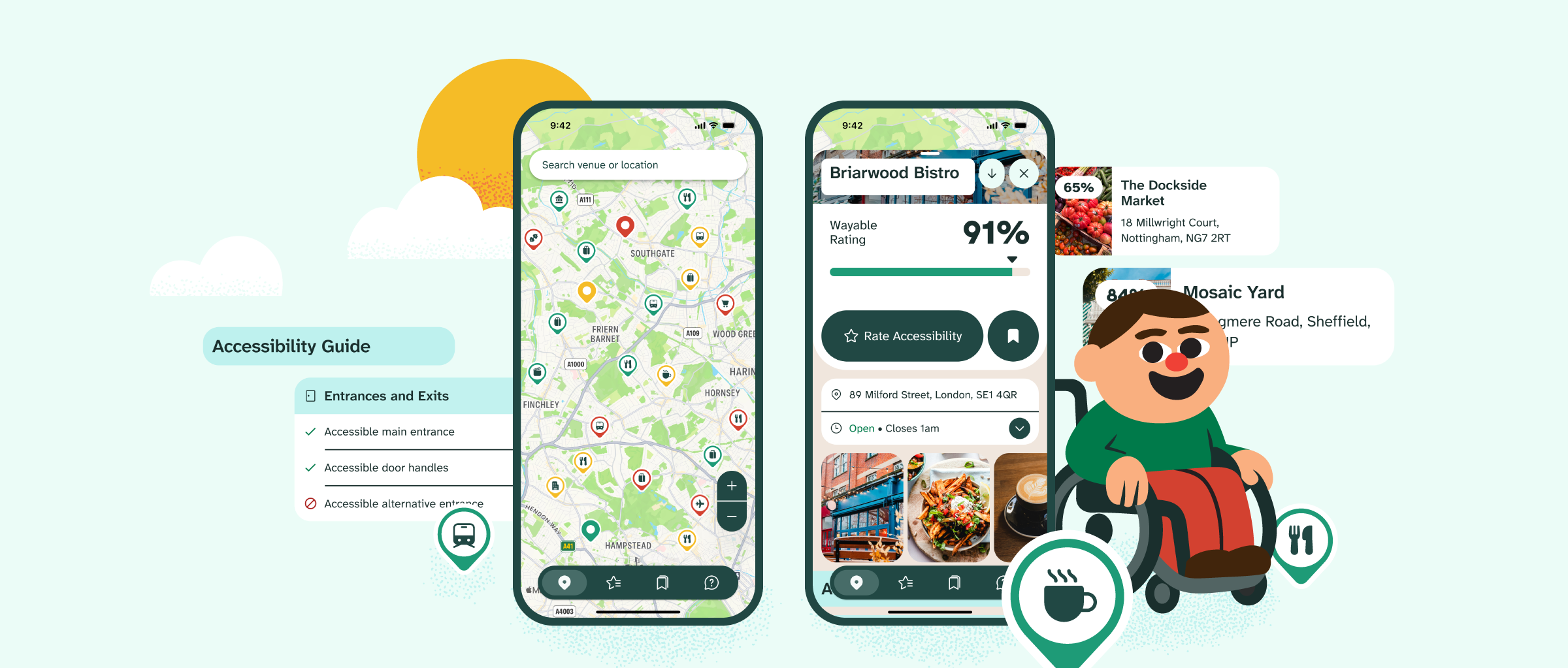
Wayable is Fluo's own accessible venue map for the UK, built in house across web and mobile. Its sister project Smart Stop Plus, funded by the National Centre for Accessible Transport, designed an accessible bus stop toolkit spanning e-ink displays, hearing loops, tactile panels, solar power and 4G, co-designed across around six sessions with RNID, Whizz-Kidz and the National Autistic Society.
Run with disabled people's organisations
RNID, Whizz-Kidz and the National Autistic Society
E-ink displays, hearing loops, intercom, tactile panels, solar power and 4G
Wayable built in house across web and mobile
Wayable is Fluo's own accessible venue map for the UK. Smart Stop Plus is its accessible bus stop project, funded by the National Centre for Accessible Transport.
Finding out whether a venue is genuinely accessible before you arrive is still unreasonably hard. The information is patchy, out of date, or simply missing, and the maps and services already out there did not solve it well enough. No client asked Fluo to fix this. Fluo picked it up because it was worth fixing.
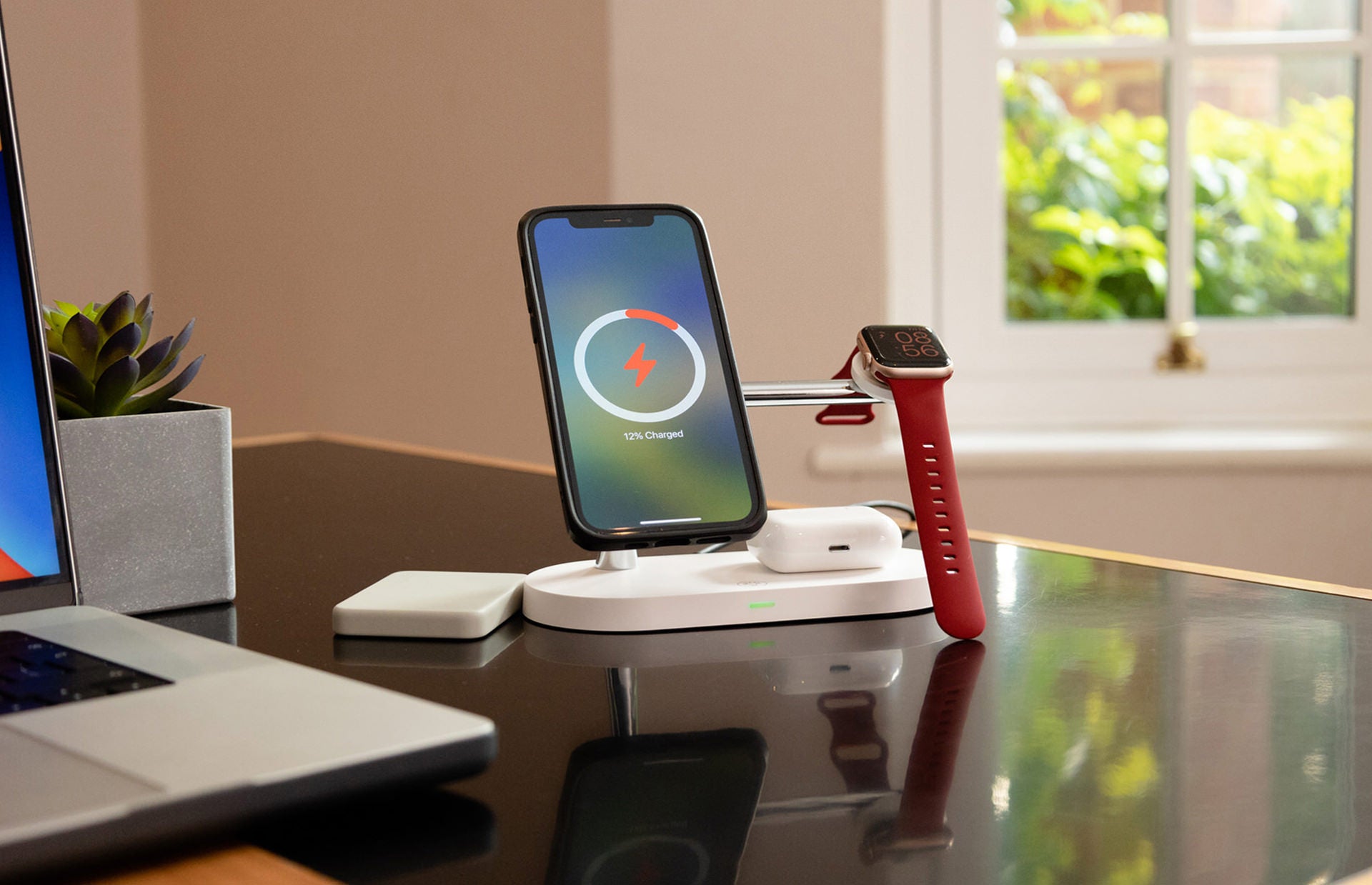
Wayable is Fluo's own accessible venue map for the UK, built in house across web and mobile with a review and approval workflow so the information can be trusted. Alongside it, Fluo won funding from the National Centre for Accessible Transport to design Smart Stop Plus: a toolkit that could be installed at a bus stop to make it accessible, feeding live data back into Wayable so the map would cover the journey as well as the destination.
Smart Stop Plus was designed as a base package with add-ons that vary by location and local need: e-ink panels carrying live bus information, hearing loops, intercom, tactile panels so visually impaired passengers can read live updates by touch, solar power and 4G to run and connect the lot. The solution was co-designed and validated across around six sessions with disabled people's organisations, including RNID, Whizz-Kidz and the National Autistic Society, who worked with Fluo to build the list of criteria that would decide whether it was working.
Wayable progressed from concept to a working web and mobile product, while Smart Stop Plus completed its first phase of research, co-design and technical development with disabled people's organisations. Together, they created a validated blueprint for connecting accessibility data with the physical journey, demonstrating Fluo's ability to engineer across web, mobile, embedded hardware, power, connectivity and live data as one connected system.